May 232014
 

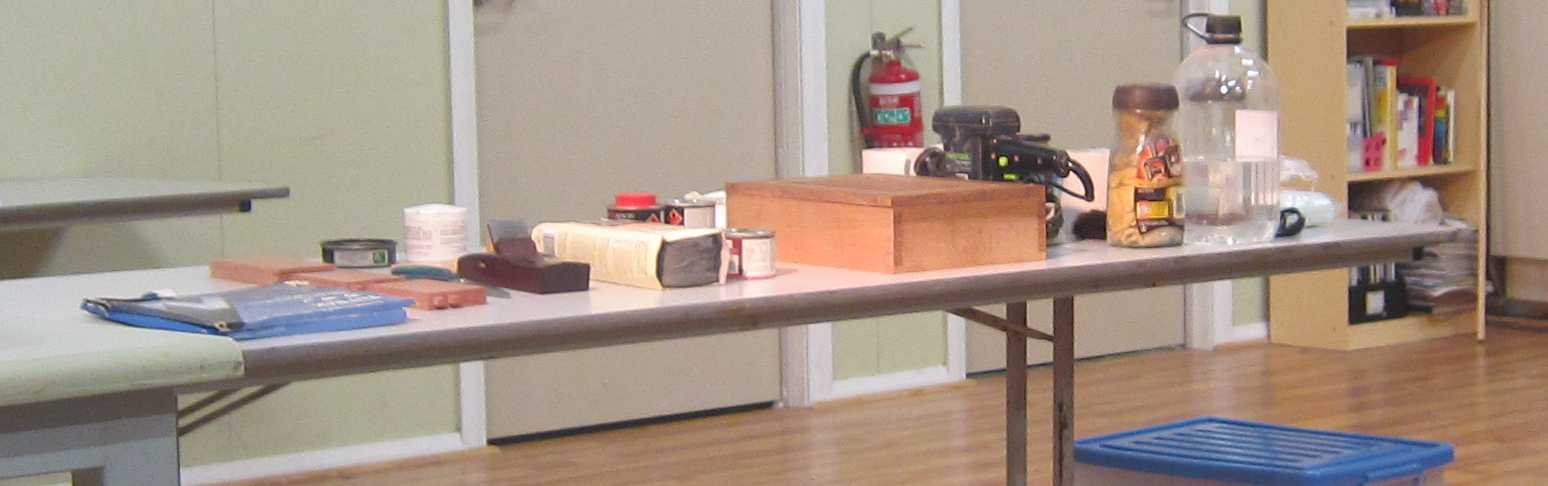
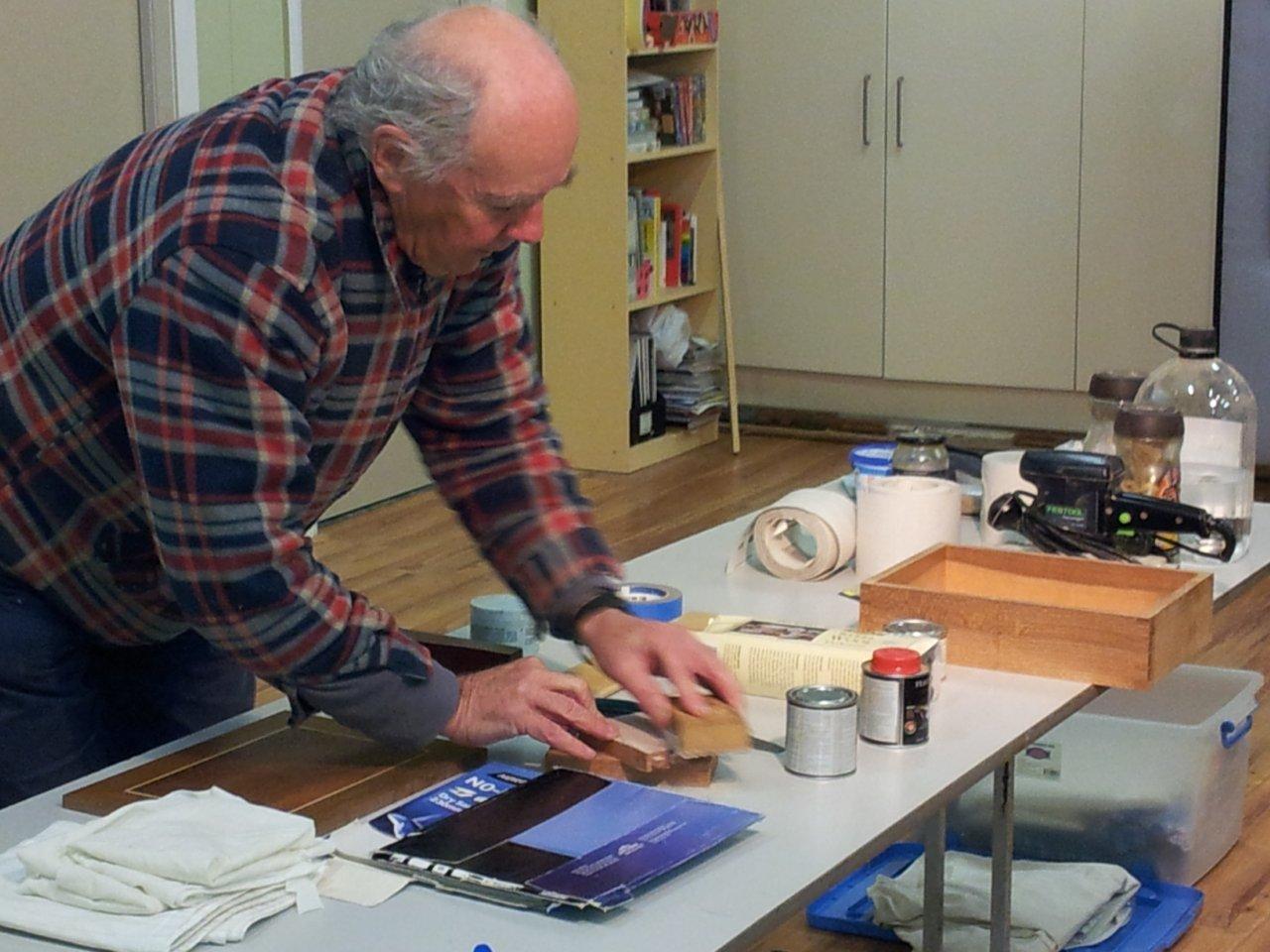
Fred Buckley from the Woodcraft Guild gave us a wonderful demonstration of finishing for our boxes, and a lot of other useful information too!
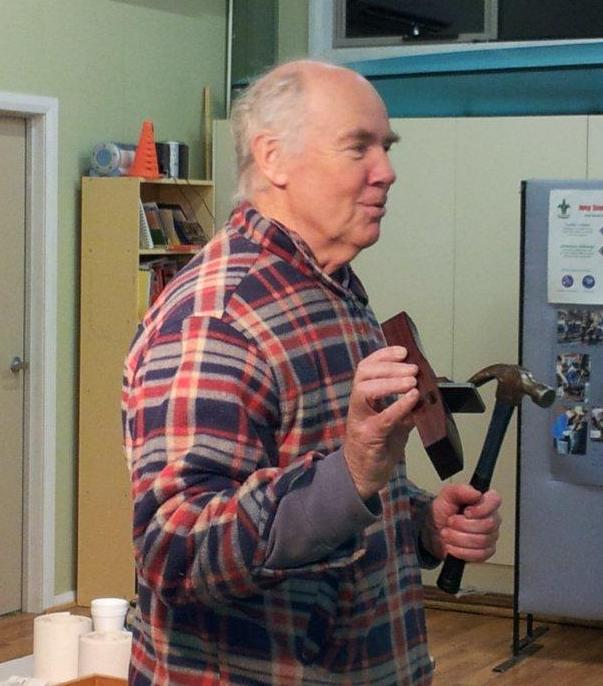
 

Many may remember Fred when he spoke to us at our first box making meeting in March. Check out some more of Fred’s lovely work on his Woodcraft Guild profile page.

Preparation

As Fred emphasised, over 90% of the work in finishing is the preparation of the wood before applying any varnish or oil.

To this end, he showed his lovely James Krenov inspired polishing plane, including how to adjust the blade.

For those interested in building their own polishing plane, David Finck (who was taught by Krenov) has a book and video on the subject. See the trailer for the video.

For sanding, Fred uses the Festool ½ sheet orbital sander starting with 120 grit to take out all marks (unless using the polishing plane). He then follows with 180, 220, 240, 400 using a good quality cork sanding block (with the grain!), and a final 1,500 grit after dampening the wood to raise the nap.

For boxes, Fred recommended sanding to 220 grit before cutting dovetails or finger joints to ensure a proper fit before final assembly.


Fred then showed us his two favourite finishes:

Finish 1 – Wipe On, Wipe Off

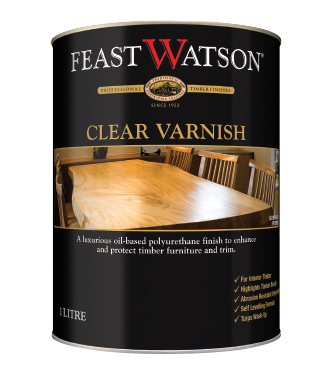
For the outside of the box, Fred uses a 50/50 blend of Feast Watson Fine Buffing Oil and Clear Varnish applied with a linen cloth. A second coat is applied after drying overnight.

For a bit more background on this technique, have a look at Bob Flexner’s articles;

Finish 2 – Shellac and Wax

For the inside of the box, Fred recommends shellac and wax for a more inert surface and pleasant odour. The wood is best coated before assembly, taking care when gluing to ensure there is no bleeding onto the prepared surface.

Fred uses a de-waxed blond or super blond shellac dissolved in methylated spirits for 24 hrs at about a 1:8 ratio, and then further diluted by half before use. The shellac is applied with a mop made from clean linen wrapped around cotton wool. At least 7 coats are needed, although each coat can be applied reasonably quickly after the previous since drying takes only a few minutes. Fred uses the Brooklyn Tool and Craft shellac supplied by Woodcraft.

A 1,500 grit wet and dry can then be used with soapy water to prepare for the wax layer.

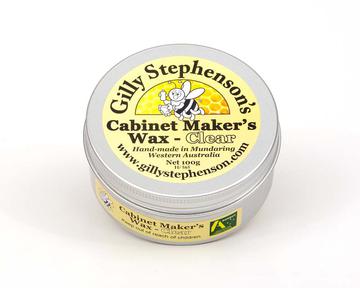
Fred then uses Liberon #0000 very fine steel wool to apply the final wax layer, using U-Beaut Traditional Wax, or Gilly Stephenson’s Cabinet Maker’s Wax for a harder finish, and finishing up by buffing with a clean soft cloth.

 

So – off to work on those boxes!

Apr 052014
 

The Woodpecker

Newsletter of the Triton Owners’ Club of the ACT


Special Edition April 2014


Message from Incoming President

Earlier this year Steve Walker resigned as President of the Club. In accordance with our Constitution and after seeking general feedback from members at the March meeting of the Club, the Committee appointed me President and Ron Bryson as Vice President. I would like to thank members for putting their trust in the Committee and me to run the Club until the next Annual General Meeting.
 
I would also like to take this opportunity to thank Steve Walker for the contribution he made as Club President over the past two years. He has left the Club in a strong position.

• Financially – due to the sale of surplus equipment and the successful sausage sizzle in January – we have sufficient funds to carry on existing activities whilst also allowing us to give future consideration to a range of different options and activities.
• A major legacy of Steve’s term as president has been to organise the Club’s activities around an annual theme. In 2013 the topics for normal monthly meetings were based on the Club’s project of making a computer desk. The focus for this year is box making.
• We now have access to new Club premises which allow us to continue our normal monthly meetings. More importantly they provide the flexibility which we did not previously have to hold additional meetings and workshops.
• Steve also started the revamp of the Club’s website which should be fully operational in early April thanks to Craig Perkins who has taken over Steve’s other task as Webmaster.

 
This is not to say that we do not have our challenges. A key challenge for the Club and one which the Committee is focused on is to arrest the decline in membership. We must continue to meet the needs and expectations of existing members whilst also attracting new members. We need to cover the basics of wood working using Triton equipment but we must also add variety and advanced topics for the benefit of experienced members. I think all members whether they are beginners or highly experienced appreciated the presentation by professional box maker Fred Buckley at our March meeting. The meetings in April and May will include demonstrations of the application of router and table saws to box making. Those new to the Club will get maximum benefit from these demonstrations but there will also be aspects that are new to even the more experienced member.
 
If there is sufficient interest from members we are considering booking the hall for additional Wednesday evenings to run more hands-on workshops for members. Such workshops could, for instance, be used by members who don’t have a finger joiner to use the Club’s to construct the frames for their boxes. Let us know if this is something you want us to pursue.
 
Recent excursions to Thor’s Hammer and Questacon last year also added variety to the program and provided greater opportunities for social interaction between members. A member has suggested an excursion to a local furniture maker and we are looking at incorporating this into our list of excursions for the year.
 
The Committee is also looking at ways to increase our profile in the community. The Bunning’s sausage sizzle in January, although primarily a fund raiser, also brought home to us a general lack of awareness of Triton wood working equipment. People know about Mitsubishi Tritons with many wanting to know why a ‘Triton four wheel drive club’ makes wooden toys to give away to local charities. With this in mind we are in discussion with a local Triton stockist to run Triton demonstrations over a weekend. The store manager is considering how to make this part of a major promotion for Triton gear. We are looking at how we can use it to attract new members to the Club. We will also use this event to raffle the computer desk we made as the Club project for 2013. We hope members will be available to support this promotion by helping to sell raffle tickets prior to and during the event and to provide examples of items including toys that we have made using Triton gear. We will keep you informed as plans come to fruition.
 
The Committee is also interested in your feedback on things you would like the Club to get involved in. Someone has suggested a tool swap meet. If this is something of general interest we could arrange for members who have hand tools they want to sell/dispose of to bring them along to a meeting. Alternatively we are incorporating a classified section on the new website which will allow members to post wanted/for sale adverts.
 
My intention is to provide reports and feedbacks to members on a regular basis. If Club Members are interested and provide news items I will try to resurrect the Club’s newsletter, The Woodpecker with the intention of publishing this newsletter on a quarterly basis.

John Karas
President TOCACT

Mar 272014


The Annual Competition and Christmas Barbeque are being held at the December Triton Club meeting on WEDNESDAY 2nd December at Duffy Scout Hall. Please note that the BBQ will commence at 6:00 pm. The BBQ will be pay as you go affair with prices set to recover costs only.

If you have a competition entry, please have it fully set up by no later than 6:30 pm to facilitate timely judging. This means you will have to have lodged your entry form(s) with the Competition Convener well before that 6:30 deadline in order to allow the Competition Convener to allocate an entry number for each of your entries.

In this regard, please remember, a separate entry form is to be lodged with each piece entered in the competition so members will need to print as many copies of the entry form as the number of entries they propose to lodge on the evening.

Entries have to have been made in the past two years, and cannot have been previously entered. This competition is only open to financial members.

We have four categories this year – Toys, General Woodwork, Workshop, and a Maiden category for members entering for the first time. So if this is your first entry you can choose Maiden or one of the other relevant categories.

CATEGORIES
Toys: Unlimited except should be designed for a child as a toy and not a model; i.e. can a child use this to play with or will it sit on a shelf for display.
General: Might include tables, chairs, beds, chests, puzzles, quilt racks, cupboards, cabinets, stools, benches, planter boxes, camping or fold-up tables, etc.
Workshop: Might include jigs, tools, tool boxes, workshop assistance etc.

Maiden: The only criteria for items in this category are that the member entering has never entered anything in our competitions in previous years.

JUDGING CRITERIA
Fit For Purpose: Can it be used (safely) as intended?
Look: Feel, Finish, Visual Appeal
Materials: Best use of materials (bonus points will be added if you use recycled materials).
Innovation: Original ideas or designs

Provided there are sufficient entries of merit in each category there will be three cash prizes in each: 1st, 2nd and 3rd prizes of $50, $35 and $20 respectively.

Mar 152014
 

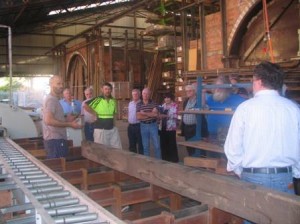
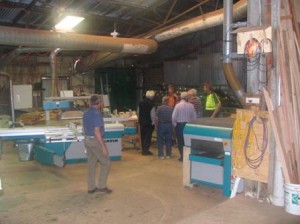
Members had an enjoyable evening touring Thor’s Hammer at the Brickworks, Yarralumla (and collecting free samples from the woodpile!) with our guide Thor himself. Thor’s Hammer are suppliers of recycled & environmentally sustainable timbers, milled products and joinery.

Thor took us through the whole process of timber recovery to final product, with a final inspection of dressed timber available for sale to the public.

Of interest was the Super Sap Thor uses to fill nail holes and cracks – a clear environmentally friendly epoxy that allows the natural colour of the wood to show through (Thor is a also supplier of the product in Australia).

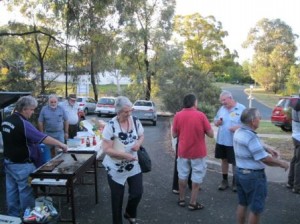
A couple of photos from our exploration of Thor’s Hammer

Mar 152014
 

In 2014 the theme for meetings was wooden box making, covering wood selection, design, hardware, woodworking techniques and finishing.

The winner of our special box category in the Club’s annual competition was John’s lovely red gum jewellery box with spotted gum insert.

2014 Winner - closed

2014 Winner - open

 
Hugh’s medal box was awarded second, and Chris’ keepsake box – with a special mention by the judges on the perfect match of wood grain – was awarded third.

2014 - Box 2

2014 - Box 3

Mar 112014
 

In 2013 the monthly meetings revolved around the Club’s project to build a laptop computer desk starting from the selection and dressing of timbers through to the finish on the final product – this is it!


Dec 032013
 

Our last event for 2013 was a barbecue and the judging of our annual woodworking competition.

Many thanks to Mick Brice and the Lions Club who did a good job of feeding us.


Following are the 2013 competition winners

General category 

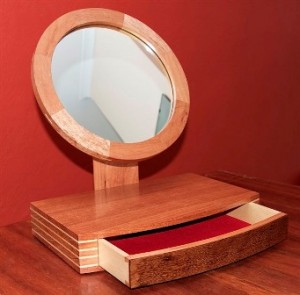
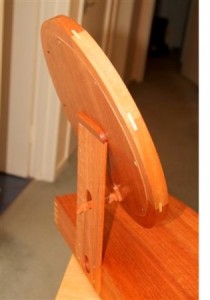
1st prize went to Ian Pulsford for this fine mirror set:

Chris asked Ian how he made the circular frame, and here’s his response:

The circle was constructed from eight straight pieces of wood angle cut at the ends to make an hexagon. Slots were cut into the end of each piece to allow insertion of hand made silver ash biscuits to create added strength and a decorative detail to the mirror frame. The mirror frame was then cut to a circle using a band saw leaving lugs at each join so that each section could be  glued and clamped. The lugs were then band sawed off. The mirror frame was placed into a circular template which was used to guide a router to cut the inner and outer surfaces to perfect smooth circles. Another circular template was used to hold a trimmer to allow the mirror frame to rotate around the cutter to cut recesses for the mirror and backing plate. The plywood backing plate was band sawed and sanded using a linisher sander until it fitted into the back of the frame. The two templates were made out of melamine covered MDF. The curved drawer fronts were made by laminating 5 thin strips of timber which were glued and clamped in curved template made of thick MDF. I have found that anything with curves takes 4-5 times as long and an object with straight lines.

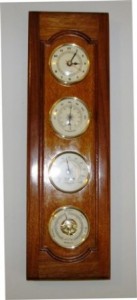
2nd prize went to Hugh Hutchinson for this weather station:

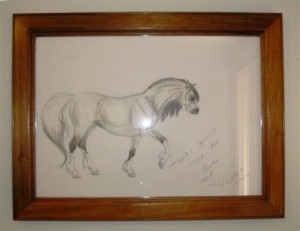
And 3rd prize went to Hugh Hutchinson for this picture frame (the picture wasn’t judged!)


Toys category

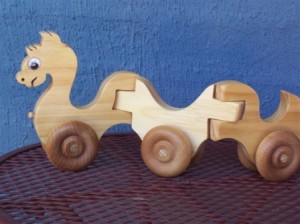
1st prize went to Bruce McKenzie for this dragon:

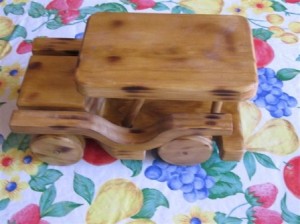
2nd prize went to Dave Veness for this Fred Flintstone car (Yabba Dabba Doo!)

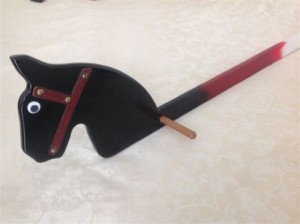
And 3rd prize went to Barry Cook for a hobby horse:


Workshop category

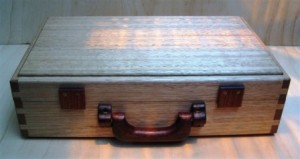
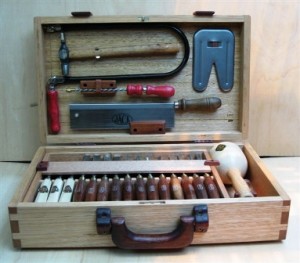
1st prize went to Hugh Hutchinson for this magnificent fitted tool case (plenty of drooling over this one):


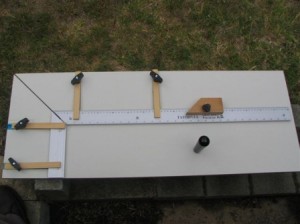
2nd prize went to Chris Mobbs for this picture frame making jig for a Triton 2000 workcentre:

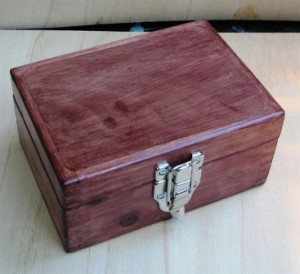
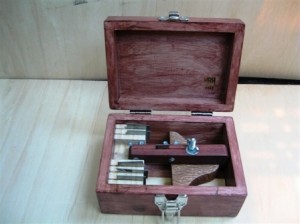
3rd prize went to Hugh Hutchinson for this scratch block, box and cutters:


Maiden category

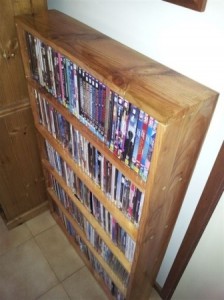
The one and only prize went to John Karas for this dovetailed bookcase (the books weren’t judged!)


Nov 062013
 

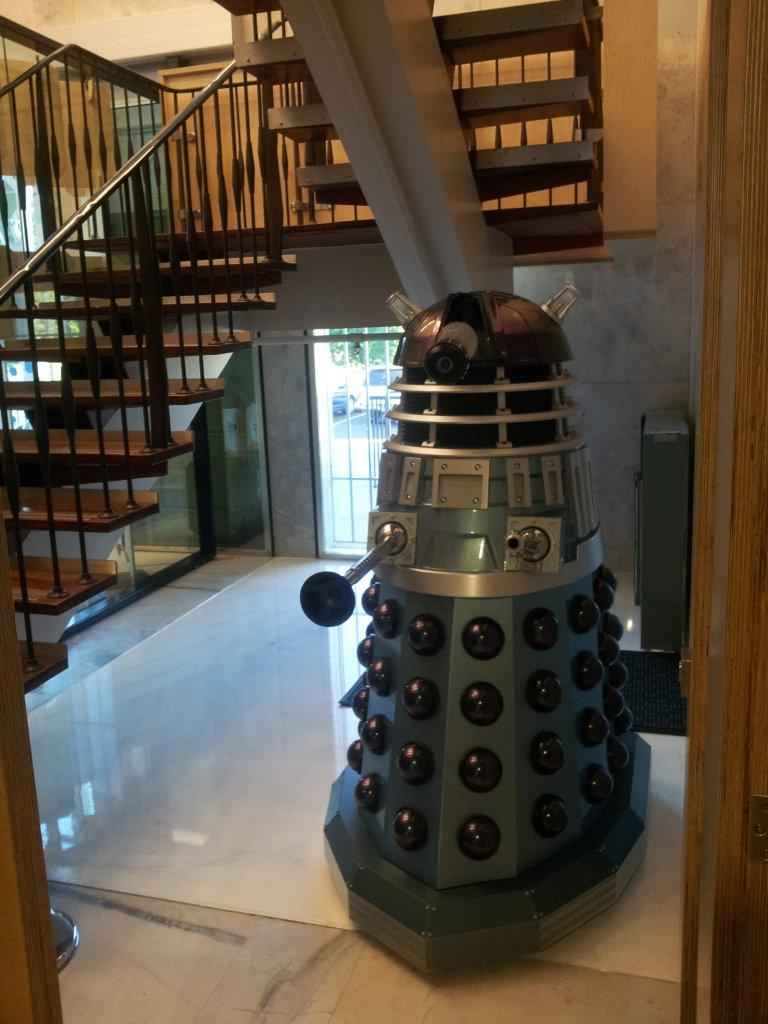
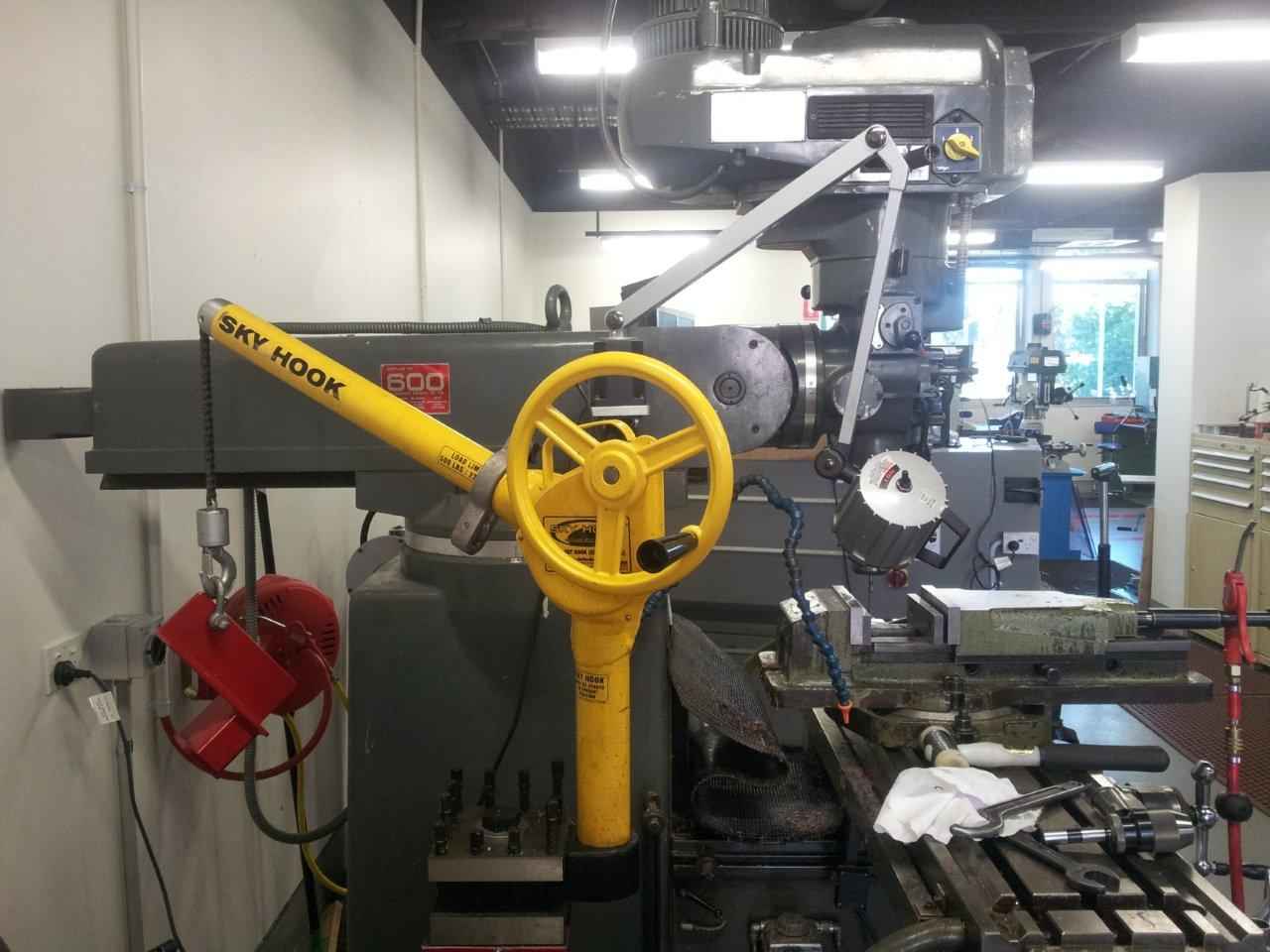
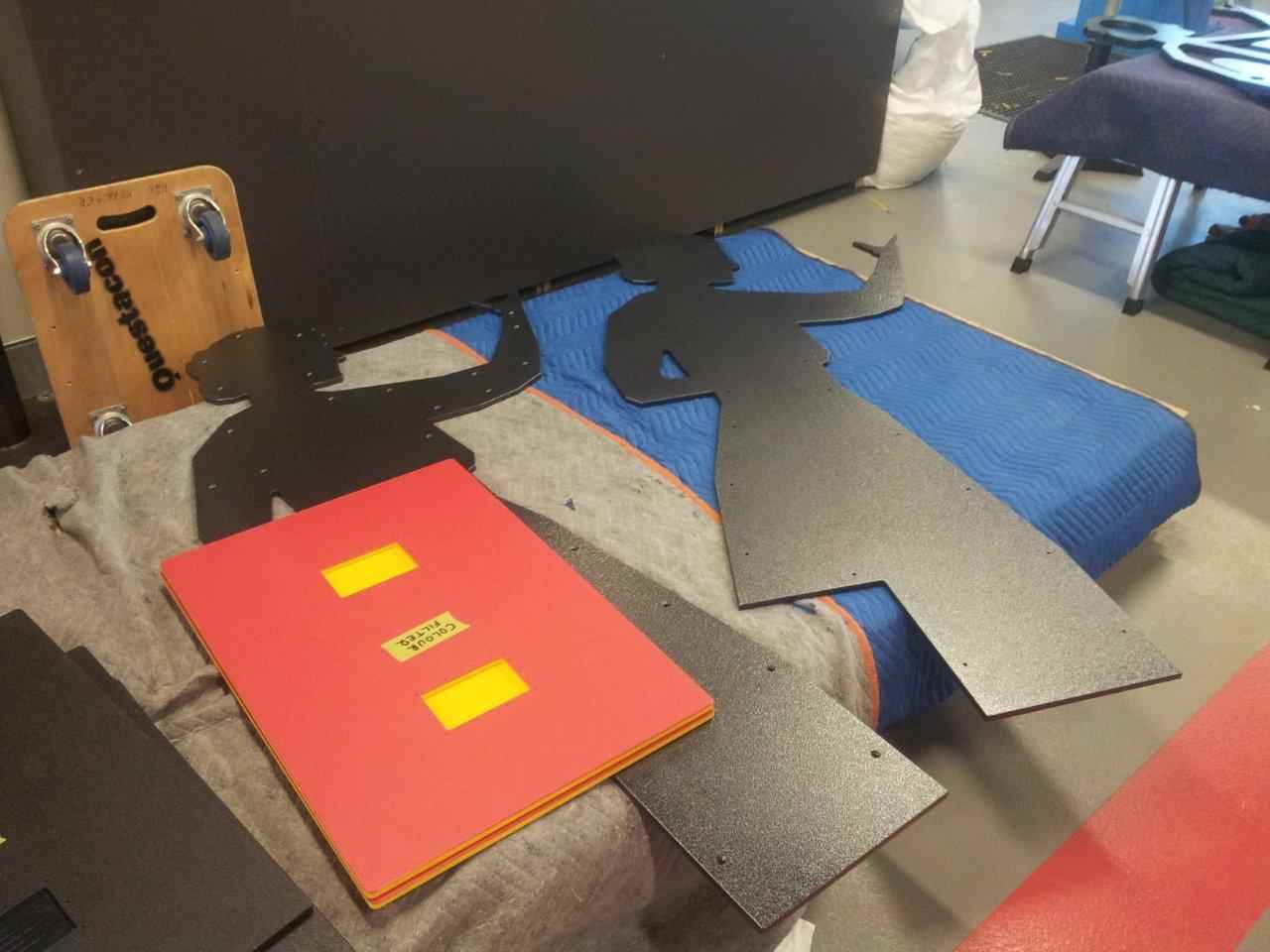
Members were given the opportunity to tour the Questacon Technology Learning Centre in Deakin.


Memorable moments included;

  • Meeting a life size Dalek that delivers drinks,
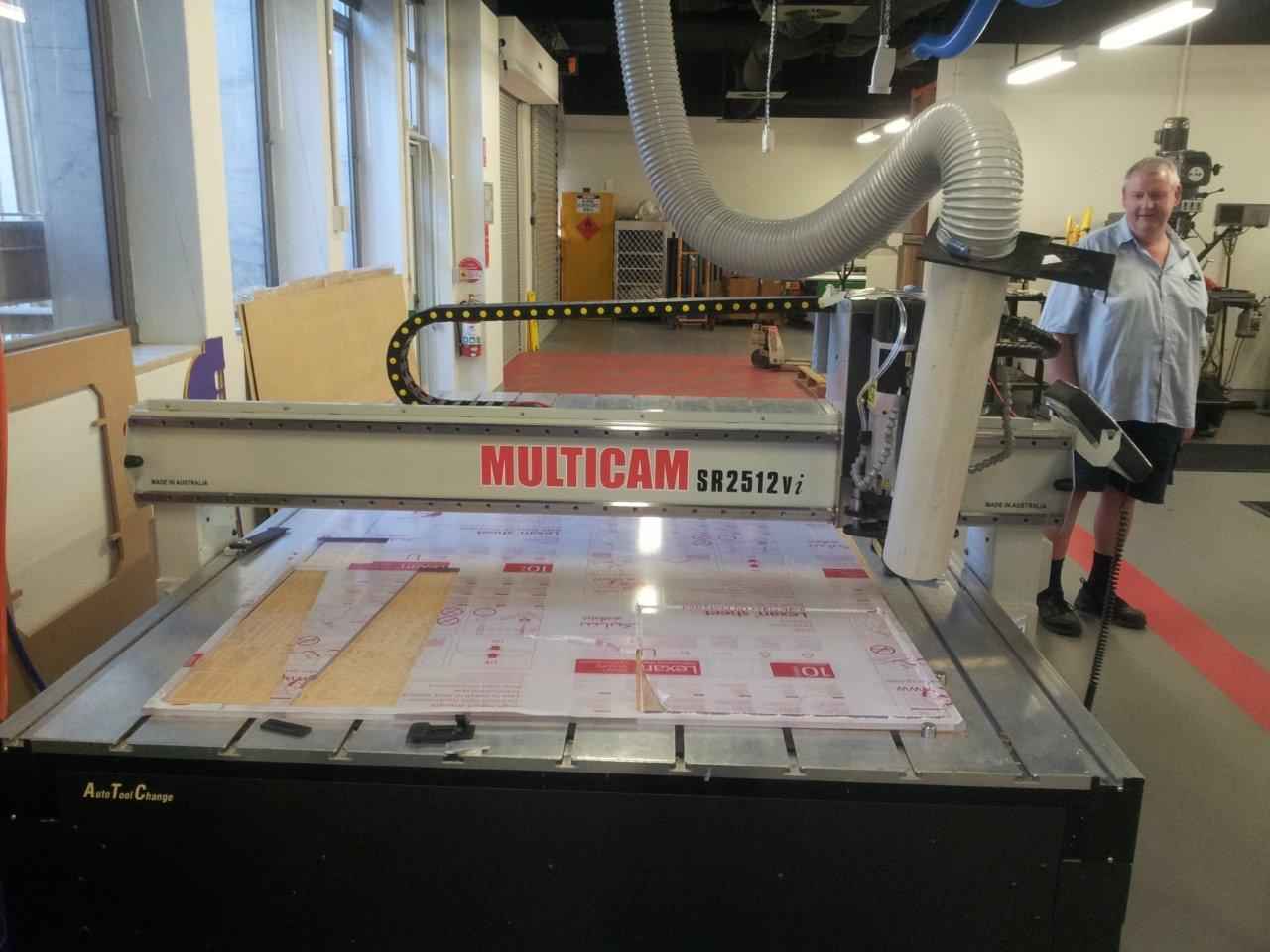
  • A massive computerised laser cutter, and
  • A 3D printer!

Check it out at Questacon Technology Learning Centre

We also had the good fortune to view Hoke’s Famous Inventions.

These amazing inventions included;

  • Hoke’s Load of Balls,
  • Demagnifying Glass,
  • Rope Hammer,

  • Lost Document File,
  • Threadless Screws,
  • Spark Plug Sparks, and
  • The Leg Pull!

The ABC Collector’s program covered the exhibition in 2011 – check it out Hoke’s Famous Inventions